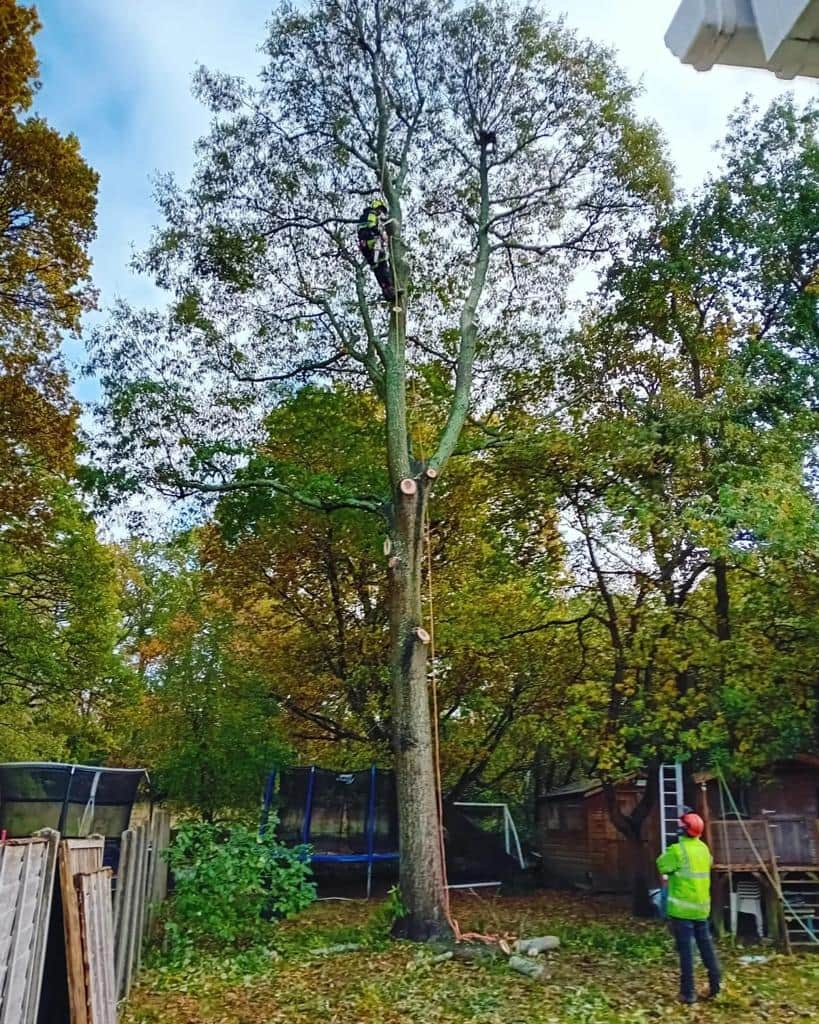
Tree pruning plays a vital role in maintaining tree health, safety, and appearance. When carried out correctly, it supports strong growth, improves structure, and reduces long-term risk. However, incorrect pruning can have serious and lasting consequences for trees across Tetbury, affecting not only their condition but also the surrounding environment and property.
At EM Tree Surgery Tetbury, correct pruning is approached as a skilled arboricultural practice, not a simple cutting task. Understanding what can go wrong highlights why professional methods matter.
Structural Weakness and Increased Failure Risk
One of the most common outcomes of poor pruning is structural weakness. Incorrect cuts can remove key supporting limbs or create imbalanced weight distribution within the canopy. This often leads to weak regrowth or excessive strain on remaining branches.
Over time, these weaknesses increase the likelihood of limb failure, particularly during high winds or storms. What begins as an aesthetic issue can quickly become a safety concern if the tree can no longer support its own structure.
Poor Wound Healing and Disease Entry
Trees rely on natural compartmentalisation to seal pruning wounds. When cuts are made incorrectly, such as leaving stubs or tearing bark, the tree struggles to close the wound effectively.
Open or poorly formed wounds provide an entry point for decay fungi and pests. Once decay becomes established, it can spread internally, weakening the tree from the inside out while remaining largely hidden from view.
Uncontrolled or Weak Regrowth
Improper pruning often triggers rapid, poorly attached regrowth known as epicormic shoots. These shoots grow quickly but lack strong structural attachment to the main stem or branch.
Although this regrowth may appear vigorous, it is far more likely to fail in the future. The result is a cycle of repeated pruning needs and increasing risk, rather than a stable, well-managed canopy.
Long-Term Decline in Tree Health
Excessive pruning or removing the wrong branches can severely reduce a tree’s ability to photosynthesise. Loss of too much leaf area places the tree under stress, reducing energy reserves and weakening its natural defence systems.
Stressed trees are more vulnerable to pests, disease, and environmental pressures. Over time, this decline can lead to premature dieback or complete failure, even in trees that were previously healthy.
Visual Damage and Poor Tree Form
Incorrect pruning can permanently alter the natural shape of a tree. Harsh cuts, topping, or uneven crown reduction often result in an unnatural appearance that detracts from the surrounding landscape.
In Tetbury, where mature trees contribute significantly to local character, poor pruning can have a lasting visual impact that cannot easily be reversed.
Why Professional Pruning Makes the Difference
Effective pruning requires an understanding of tree biology, growth patterns, and long-term structural development. Each cut should have a clear purpose, whether to reduce risk, improve form, or support healthy growth.
EM Tree Surgery Tetbury applies informed pruning techniques that respect the natural structure of the tree while addressing safety and management needs. This approach helps trees remain strong, balanced, and resilient over time.
Conclusion
Incorrect tree pruning can lead to structural weakness, disease, uncontrolled regrowth, and long-term health decline. What may seem like a minor mistake can have lasting consequences for both the tree and its surroundings.
For property owners in Tetbury seeking responsible tree care, EM Tree Surgery Tetbury provides professional pruning services focused on tree health, safety, and longevity. Get in touch to discuss how expert pruning can protect your trees and ensure they continue to thrive for years to come.
Call us on: 01666 337 167
Click here to find out more about EM Tree Surgery Tetbury
Click here to complete our contact form and see how we can help with your tree care needs.