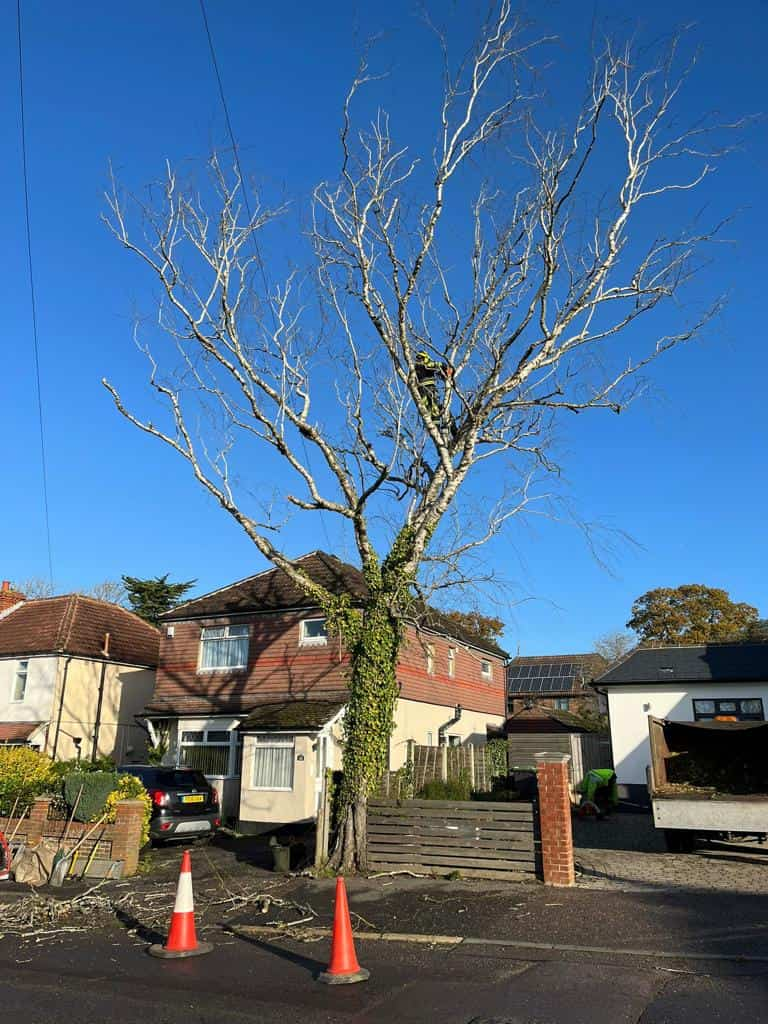
Hedges are one of the most valuable features in many gardens, providing privacy, structure, shelter, and year-round visual appeal. However, achieving a thick, healthy hedge does not happen by chance. Regular hedge cutting is essential for encouraging strong, dense growth and preventing hedges from becoming sparse, uneven, or difficult to manage.
For homeowners in Tetbury, Gloucestershire, professional hedge maintenance can make a significant difference to the appearance and health of a garden. At EM Tree Surgery Tetbury, we provide expert hedge cutting services that help hedges remain attractive, manageable, and healthy throughout the year.
Understanding How Hedges Grow
Many hedge species naturally focus their energy on extending upwards and outwards. If left unchecked, this growth pattern can result in long shoots, uneven branches, and thinning lower sections.
Over time, neglected hedges may become:
- Sparse at the base
- Overgrown at the top
- Uneven in appearance
- More vulnerable to weather damage
Regular cutting helps redirect the plant’s energy, encouraging new shoots to develop throughout the hedge rather than concentrating growth in a few dominant areas.
Stimulating New Growth
One of the main benefits of hedge cutting is that it stimulates the production of new shoots.
When selected branches are trimmed:
- Growth hormones are redistributed
- New side shoots are encouraged
- Branching becomes more frequent
- The hedge develops a fuller appearance
This process helps create the dense structure that many homeowners desire for privacy and aesthetics.
Creating a Thicker Hedge
A dense hedge provides more effective screening and a stronger visual boundary around a property.
Regular trimming encourages:
- Increased branching
- Fuller foliage coverage
- More uniform growth
- Reduced gaps within the hedge
Without routine maintenance, many hedge species gradually lose their dense structure and begin to appear thin or patchy.
Improving Light Distribution
Overgrown hedges often block sunlight from reaching lower branches. This can lead to thinning growth near the base, leaving gaps that are difficult to correct later.
Professional hedge cutting helps:
- Allow light to reach lower growth
- Promote foliage throughout the hedge
- Reduce bare patches
- Maintain an even appearance
Good light distribution plays an important role in encouraging dense, healthy growth from top to bottom.
Encouraging Stronger Branch Development
When a hedge is maintained correctly, new branches develop more evenly across the plant.
This leads to:
- Stronger overall structure
- Better resistance to weather conditions
- Improved shape retention
- Healthier long-term growth
A dense hedge is often a stronger hedge, capable of withstanding seasonal weather more effectively.
Preventing Leggy Growth
Leggy growth occurs when a hedge produces long, thin shoots with limited side branching. This often happens when hedges are left untrimmed for extended periods.
Signs of leggy growth include:
- Thin foliage coverage
- Sparse branches
- Uneven shape
- Weak growth structure
Regular trimming helps prevent these issues and encourages compact, healthy development.
Maintaining Privacy
For many homeowners, privacy is one of the primary reasons for planting hedges. A dense hedge provides a far more effective screen than one that is thin or patchy.
Routine hedge cutting helps:
- Maintain consistent coverage
- Reduce visible gaps
- Improve screening effectiveness
- Enhance garden privacy
This is particularly beneficial for properties where privacy is a priority.
Improving the Overall Appearance of the Garden
A well-maintained hedge contributes significantly to the appearance of an outdoor space. Dense, neatly shaped hedges create a sense of order and structure within the landscape.
Professional hedge maintenance can:
- Improve kerb appeal
- Define garden boundaries
- Create attractive garden features
- Enhance the overall presentation of the property
Healthy hedges often become one of the most attractive elements of a garden.
The Importance of Timing
Different hedge species benefit from trimming at different times of the year. Cutting at appropriate intervals helps maximise growth and minimise stress on the plant.
Professional hedge care ensures:
- Suitable trimming schedules
- Correct cutting techniques
- Appropriate growth management
- Long-term hedge health
This tailored approach produces better results than irregular or overly aggressive cutting.
Why Professional Hedge Cutting Matters
While hedge trimming may seem straightforward, achieving consistent growth and maintaining hedge health requires knowledge and experience.
At EM Tree Surgery Tetbury, we provide:
- Hedge cutting
- Hedge reduction
- Hedge reshaping
- Seasonal hedge maintenance
- General tree and hedge care
Our professional approach ensures that hedges remain healthy, dense, and visually appealing throughout the year.
Why Regular Maintenance Delivers Better Results
Hedges respond best to ongoing care rather than occasional heavy cutting. Consistent maintenance allows growth to be managed gradually and effectively.
Regular hedge cutting helps:
- Encourage dense foliage
- Maintain shape
- Promote healthy growth
- Reduce future maintenance requirements
This proactive approach supports long-term hedge performance and appearance.
Conclusion
Regular hedge cutting is one of the most effective ways to encourage dense, healthy growth. By stimulating new shoots, improving light penetration, preventing sparse growth, and maintaining a strong structure, routine maintenance helps hedges remain attractive and functional throughout the year.
For homeowners in Tetbury, Gloucestershire, professional hedge cutting services provide the expertise needed to keep hedges looking their best. At EM Tree Surgery Tetbury, we offer expert hedge maintenance tailored to the needs of each property, helping create healthier, fuller, and more attractive hedges for years to come.
Call us on: 01666 337 167
Click here to find out more about EM Tree Surgery Tetbury
Click here to complete our contact form and see how we can help with your tree care needs.