Trees can be an important feature of gardens and outdoor spaces, providing shade, character and natural interest. However, there are situations where a tree may become unsuitable for its location or develop serious structural problems that require professional attention.
Tree felling is not something that should be undertaken without careful consideration. In Tetbury, Gloucestershire, property owners should look for visible signs of decline or structural weakness and seek professional advice when a tree appears to be becoming unsafe or unsuitable.
Understanding the warning signs can help you identify when an assessment may be necessary.
Extensive Dead or Dying Branches
Dead branches are a natural part of a tree’s life cycle, but a large amount of deadwood can indicate declining health. Large dead branches may also become unstable and could fall unexpectedly.
If dead or dying sections are widespread throughout the crown rather than limited to one small area, the tree may require a more detailed assessment. A professional tree surgeon can determine whether selective pruning could address the problem or whether more extensive work is appropriate.
Significant Trunk Damage
The trunk provides the main structural support for a tree, so serious damage can be an important warning sign. Large cracks, extensive decay, cavities or sections of damaged bark may indicate internal weakness.
Not every crack or area of damaged bark means a tree needs to be removed. However, significant structural defects should be assessed professionally rather than ignored.
Fungal Growth and Signs of Decay
Fungal growth around the base or trunk can sometimes indicate decay within the tree. Mushrooms or fungal brackets may be associated with decomposing wood, although their presence alone does not automatically mean that a tree is dangerous.
Other signs, such as soft or hollow areas, extensive cavities or visible deterioration, can provide additional information about the tree’s condition. A professional assessment can help establish the extent of any potential decay.
A Noticeably Leaning Tree
Some trees naturally grow at an angle, meaning that a lean does not automatically indicate a problem. The important consideration is whether the tree has developed a new or worsening lean.
Changes in the ground around the root area, exposed roots or movement of the root plate may indicate that the tree has become less stable. These signs should be assessed promptly, particularly if the tree is close to a property, driveway or frequently used area.
Severe Root Damage
Healthy roots are essential for both stability and nutrient uptake. Construction work, ground disturbance, excavation or significant root decay can affect a tree’s ability to remain securely anchored.
Visible root damage or changes in the ground around the base of the tree should not be overlooked. Depending on the circumstances, professional advice may help determine whether the tree can remain safely in place.
A Tree in an Unsuitable Location
Sometimes a tree may be healthy but unsuitable for its current position. Excessive growth can interfere with buildings, access areas, structures or other parts of a property.
Before considering removal, it is important to establish whether pruning, crown reduction or another form of tree maintenance could resolve the issue. Tree felling may only be appropriate where other practical options are unsuitable.
Trees Affected by Storm or Accidental Damage
Severe weather or accidental impact can cause sudden structural damage. Broken limbs, split branches, damaged trunks or disturbed roots may leave a tree unstable even if it was previously healthy.
If a tree has suffered significant damage, avoid approaching unstable sections and arrange a professional assessment. The appropriate solution will depend on the extent and location of the damage.
Why Professional Tree Felling Matters
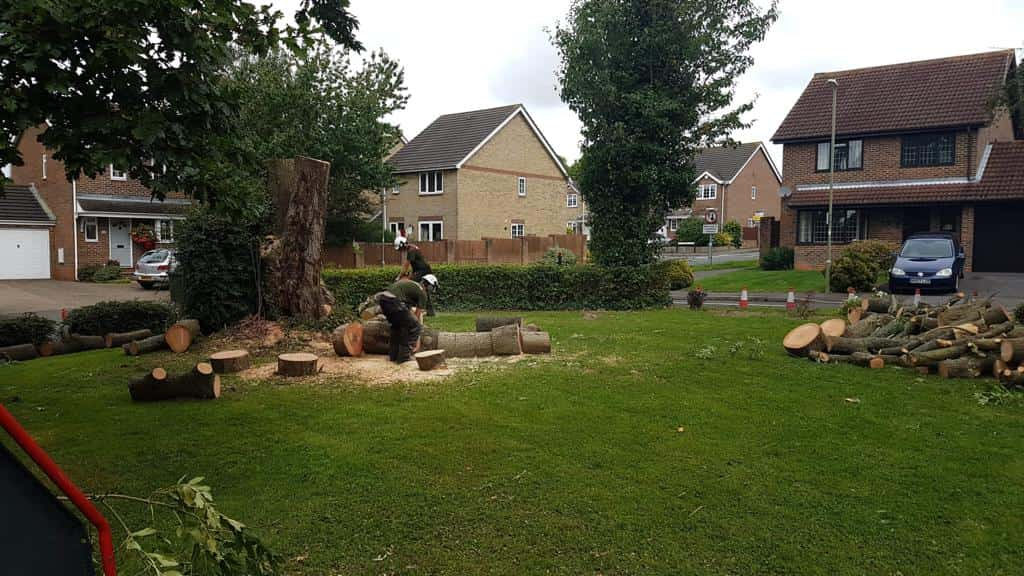
Tree felling is a specialist task that requires careful planning, appropriate equipment and an understanding of how the tree is likely to move as it is dismantled or felled.
A professional tree surgeon can assess the tree first and determine whether removal is actually necessary. Where felling is recommended, the work can then be planned around the surrounding property, structures and access requirements.
For property owners in Tetbury, Gloucestershire, EM Tree Surgery Tetbury provides professional tree services with an emphasis on careful assessment and safe, controlled workmanship.
Professional Tree Felling in Tetbury
If you have noticed structural damage, significant decay, instability or other concerns with a tree on your property, professional advice can provide greater clarity. An assessment can establish the condition of the tree and identify whether removal or another form of tree work is appropriate.
EM Tree Surgery Tetbury can discuss your concerns and assess trees throughout Tetbury, Gloucestershire, helping you understand the most suitable approach for your property.
Conclusion
Tree felling may be necessary when a tree has significant structural defects, extensive decline, severe root damage or has become unsuitable for its location. However, visible warning signs do not always mean removal is the only solution.
A professional assessment is the best way to understand the condition of a tree and determine whether felling, pruning or another form of tree care is appropriate. If you are concerned about a tree on your property in Tetbury, Gloucestershire, contact EM Tree Surgery Tetbury to arrange a professional assessment and discuss your requirements.
Call us on: 01666 337 167
Click here to find out more about EM Tree Surgery Tetbury
Click here to complete our contact form and see how we can help with your tree care needs.